How is the Universe a Simulation — The Simulation Hypothesis
What are Space, Time, and Matter made of?

We’ve always heard the term the fabric of space, but what does it really imply? Isn’t space ‘just empty’?
I thought the same things too until a couple of concerns arose. A lot of the ‘neighbors of this space were concerned, they complained about the space, how could it be? If the space is empty, how can there be movement? Wouldn’t everything disintegrate forever? Wouldn’t everything simply dissolve into space since it is a vacuum?
To understand what I just said, you need to know about Zeno’s Paradoxes.
If everything when it occupies an equal space is at rest at that instant of time, and if that which is in locomotion is always occupying such a space at any moment, the flying arrow is therefore motionless at that instant of time and at the next instant of time but if both instants of time are taken as the same instant or continuous instant of time then it is in motion. — The Arrow paradox.
The paradox states that motion is an illusion. There are differences in the accuracy of measurements. For example, if I measure a length by the scale of meters, it is only accurate when it comes to larger spaces, but when it comes to small spaces, it is not accurate, but again if you measure a length using an inch, it becomes useless on even smaller scales. And this will continue to be infinite right? Since we assume that space is empty. And if this is so, then how does an object move? If there is an infinite gap between two points, how would one object move from one point to another? It must take forever to cover that distance. Got it?
Now let’s move to the next phase.
The foundation of space
I got this insight last year and was bombarded with it constantly for several weeks until my mind resembled a jelly blob.
It is impossible to separate space-time and motion, although you can probably ignore the motion until your dog comes to embarrass you in front of your guests later.
In order to tackle the problem of space, we have to chew a little piece at a time. Here are the things to consider.
Issue #1: Nothingness.
Come to think about it, nothingness is really nothing, it is a concept that exists parallel to something, to be non-existent there has to be existent to distinguish the two, to be death there has to be a life so that we can tell them apart.
So nothingness is really the opposite pole of something. And those two attributes co-exist together.
Issue #2: Unison or Quantum entanglement.
So then there is a state that reality is in unison or entangled and a state that is at the highest separateness. What this means is that we only see separation, but on an extremely minuscule scale. All things are one and there is no separation. That this degree of separation we only perceive is a product of time, motion and space constraints.
The term frame rate in motion pictures and cameras is the number of pauses on a still image that can be generated within a second. That means the more frame rates, the more clear and detailed the picture will be. But if you exceed these shutters per second, the weirder it becomes, which means you begin to see things moving slower than what our eyes can perceive. We will use this term later so take a big bite at this one.
Issue #3 Nature of octaves and Quantum
The nature of octaves depends on two things. The first is that the system must be quantified, enclosed, or referenced. And the second thing is division. That means in order to have any working system there has to be a degree of measurements. In order to carry water, you have to create a container for it. No matter how spacious the container is, it will eventually have its limitations. Whatever you measure, whether it is length, weight, or anything else, there must be units of measurement. Otherwise, it can’t be a reality.
If you have a defined length, weight, or volume of something, there is a degree of low and high. These degrees of low and high are our octave. Where am I going with this? Have you ever filled up a bottle of water? You will hear the sound Do Re Mi Fa So La Ti. These are the degrees of lows and highs, where Do is low and Ti is the highest. If you look at your horizon, your horizon is the highest and your position is the lowest. Take note of this.
The fabrics of space
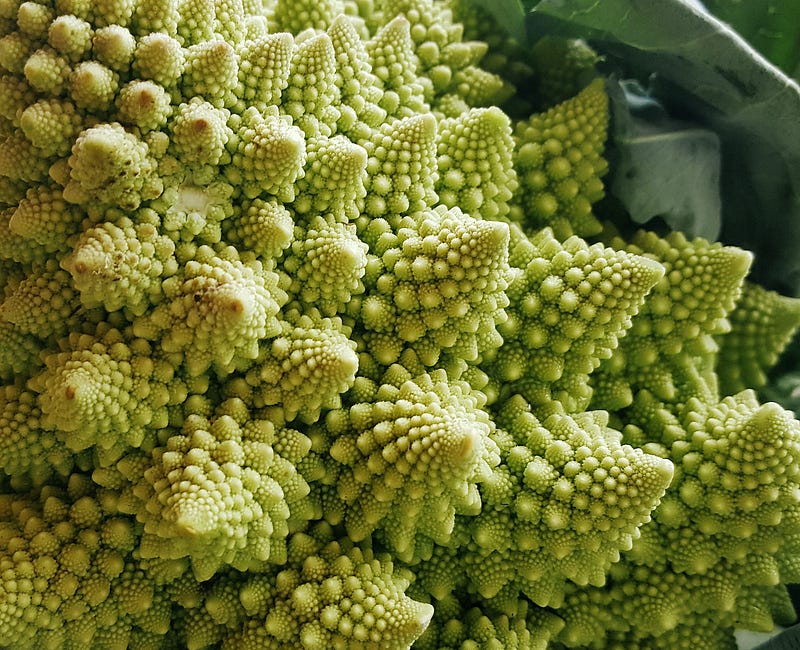
We will use these three issues to explore what space is and the nature of matter.
Phase 1. Unison and oneness
We have agreed that there is a state where all things are one thing and that there is no separation. Here are the characteristics of this state.
- In this state, there is no sense of quantity, which means you can have an infinite number of this one thing, if it is a particle you can have an unlimited amount of it.
- Then there is no sense of size either, which means relative to the observer it can be infinitely large, and infinitely small.
- Then there is no sense of motion either, which means relative to you it can be all places at once, it can move an infinite number of speeds and infinitely slow.
- Then there is no sense of shape or form, which means relative to you it can have an infinite number of shapes and sizes, it can wiggle twist turn, and do anything.
- And finally, there is no sense of mass, which means relative to you it can be infinitely heavy or infinitely light.
So now you see our creation is free, free from everything, it can do whatever it pleases, and create infinite possibilities of anything. But then these creations are always there, we cannot say it keeps on creating, but they are always there since there is no sense of time. And that all possibilities are always there.
The birth of space.
Remember I introduced you to the guy named OCTAVE? That without quantity, there is simply nothing. So this guy comes along the way and starts quantifying things. It begins to divide and separate things. And this is how space is born.
But the birth of space is a result of presence of consciousness interacting with these quantum bubbles. And that there is no space on a perceived space.
Space is a matrix of these quantum bubbles or I call them blobs. The blobs are arranged in a flower of life pattern, similar to the division of cells in an embryo.
This matrix of bubbles is not infinite either because of that friend of ours, the octave. As they stacked themselves, they aligned themselves in accordance with the law of octaves. Octaves are sized according to their dimensions, and spaces of different dimensions are different.
But each bubble individually, because it inherits the nature of quantum entanglement, can also produce another octave relative to a single bubble. This creates a dimension of space within a dimension.
These blobs, because of the nature of octaves, have a degree of high and low. There is no large or minuscule particle in the state of entanglement. Therefore, these bubbles are also made of smaller bubbles where the bigger bubbles are what we perceive as space. And the smaller bubbles that make up the biggest bubbles are the threshold of that dimension.
What is matter?
So now we have a quantified amount of bubbles that are stashed up in a matrix. Remember these bubbles can wiggle as they wiggle, they create vibrational patterns, but again because of the nature of octaves, on any given system these bubbles have a degree of lows and highs where they cannot vibrate beyond or below a certain threshold.
Because there are no opposing forces, as they wiggle, they create standing waves, which means they will wiggle forever unless interrupted.
This spectrum of vibration is that spectrum of matter in a given system or dimension. This spectrum of matter begins with the lightest substance to the densest substances.
The highest vibration these bubbles can ever produce in a given octave is what we perceive as light.
What is time?
My favorite part is the understanding of time. Make sure you haven’t consumed all of the laws of octaves I have given you because you’re gonna need some for this too.
Remember the frame rates? Ok! Good. Let’s continue. We now know how space and matter are created from the matrices of bubbles or blobs. Remember in the state of oneness, that there is no sense of volume? That these bubbles can expand infinitely or become infinitely small. Well now paste a little bit of that law of octave on this one, don’t use all of it though we are not done yet.
So there is the largest expansion and the smallest contraction. As these sets of bubbles contract and expand, they expand in units, as they expand this is the movement of time, that each snapshot of a given volume is the pause of a certain wave, and that as we have discussed these bubbles can wiggle, but these wiggling and vibrations are different pauses recorded on each unit of expansion. Use the concept of frame-rate to understand it.
It is not really an expansion per se, but when you quantify things, it is perceived as time. And that these bubbles actually give a pulse of an expansion, and that each pulse is the smallest unit of time where they can change shape or make a slight change within each pulse.
What is motion then?
So far we have dealt with all the properties of reality that:
- Space is made up of a matrix of quantum blobs.
- The matter is the result of the standing waves that are created by these quantum blobs
- Time is the expansion of these blobs relative to their original size. As they expand they morph in pauses that we perceive as a movement.
In simple terms, motion is a transposition of these standing waves. A moving item is similar to what you see on television. However, on the pixel level, it is a transposing of information from one set of pixels to another that you perceive as a movement.
So when you are moving a hand on the fabric of space, these standing waves shift from one set of bubbles to another.
Conclusion.
I hope you have got some insight into how the structure of reality is, on the fundamental levels, and got a glimpse of how time behaves. The bigger question then is what causes these things to vibrate?
This is yet another advanced topic, but the short answer is consciousness. In interaction with consciousness, these bubbles project a vibrational pattern, which we perceive as matter. In your consciousness, you are only partaking a portion of the grand reality in order to project what you experience as your reality.
How is the Universe a Simulation — The Simulation Hypothesis
What are Space, Time, and Matter made of?
We’ve always heard the term the fabric of space, but what does it really imply? Isn’t space ‘just empty’?
I thought the same things too until a couple of concerns arose. A lot of the ‘neighbors of this space were concerned, they complained about the space, how could it be? If the space is empty, how can there be movement? Wouldn’t everything disintegrate forever? Wouldn’t everything simply dissolve into space since it is a vacuum?
To understand what I just said, you need to know about Zeno’s Paradoxes.
If everything when it occupies an equal space is at rest at that instant of time, and if that which is in locomotion is always occupying such a space at any moment, the flying arrow is therefore motionless at that instant of time and at the next instant of time but if both instants of time are taken as the same instant or continuous instant of time then it is in motion. — The Arrow paradox.
The paradox states that motion is an illusion. There are differences in the accuracy of measurements. For example, if I measure a length by the scale of meters, it is only accurate when it comes to larger spaces, but when it comes to small spaces, it is not accurate, but again if you measure a length using an inch, it becomes useless on even smaller scales. And this will continue to be infinite right? Since we assume that space is empty. And if this is so, then how does an object move? If there is an infinite gap between two points, how would one object move from one point to another? It must take forever to cover that distance. Got it?
Now let’s move to the next phase.
The foundation of space
I got this insight last year and was bombarded with it constantly for several weeks until my mind resembled a jelly blob.
It is impossible to separate space-time and motion, although you can probably ignore the motion until your dog comes to embarrass you in front of your guests later.
In order to tackle the problem of space, we have to chew a little piece at a time. Here are the things to consider.
Issue #1: Nothingness.
Come to think about it, nothingness is really nothing, it is a concept that exists parallel to something, to be non-existent there has to be existent to distinguish the two, to be death there has to be a life so that we can tell them apart.
So nothingness is really the opposite pole of something. And those two attributes co-exist together.
Issue #2: Unison or Quantum entanglement.
So then there is a state that reality is in unison or entangled and a state that is at the highest separateness. What this means is that we only see separation, but on an extremely minuscule scale. All things are one and there is no separation. That this degree of separation we only perceive is a product of time, motion and space constraints.
The term frame rate in motion pictures and cameras is the number of pauses on a still image that can be generated within a second. That means the more frame rates, the more clear and detailed the picture will be. But if you exceed these shutters per second, the weirder it becomes, which means you begin to see things moving slower than what our eyes can perceive. We will use this term later so take a big bite at this one.
Issue #3 Nature of octaves and Quantum
The nature of octaves depends on two things. The first is that the system must be quantified, enclosed, or referenced. And the second thing is division. That means in order to have any working system there has to be a degree of measurements. In order to carry water, you have to create a container for it. No matter how spacious the container is, it will eventually have its limitations. Whatever you measure, whether it is length, weight, or anything else, there must be units of measurement. Otherwise, it can’t be a reality.
If you have a defined length, weight, or volume of something, there is a degree of low and high. These degrees of low and high are our octave. Where am I going with this? Have you ever filled up a bottle of water? You will hear the sound Do Re Mi Fa So La Ti. These are the degrees of lows and highs, where Do is low and Ti is the highest. If you look at your horizon, your horizon is the highest and your position is the lowest. Take note of this.
The fabrics of space
We will use these three issues to explore what space is and the nature of matter.
Phase 1. Unison and oneness
We have agreed that there is a state where all things are one thing and that there is no separation. Here are the characteristics of this state.
- In this state, there is no sense of quantity, which means you can have an infinite number of this one thing, if it is a particle you can have an unlimited amount of it.
- Then there is no sense of size either, which means relative to the observer it can be infinitely large, and infinitely small.
- Then there is no sense of motion either, which means relative to you it can be all places at once, it can move an infinite number of speeds and infinitely slow.
- Then there is no sense of shape or form, which means relative to you it can have an infinite number of shapes and sizes, it can wiggle twist turn, and do anything.
- And finally, there is no sense of mass, which means relative to you it can be infinitely heavy or infinitely light.
So now you see our creation is free, free from everything, it can do whatever it pleases, and create infinite possibilities of anything. But then these creations are always there, we cannot say it keeps on creating, but they are always there since there is no sense of time. And that all possibilities are always there.
The birth of space.
Remember I introduced you to the guy named OCTAVE? That without quantity, there is simply nothing. So this guy comes along the way and starts quantifying things. It begins to divide and separate things. And this is how space is born.
But the birth of space is a result of presence of consciousness interacting with these quantum bubbles. And that there is no space on a perceived space.
Space is a matrix of these quantum bubbles or I call them blobs. The blobs are arranged in a flower of life pattern, similar to the division of cells in an embryo.
This matrix of bubbles is not infinite either because of that friend of ours, the octave. As they stacked themselves, they aligned themselves in accordance with the law of octaves. Octaves are sized according to their dimensions, and spaces of different dimensions are different.
But each bubble individually, because it inherits the nature of quantum entanglement, can also produce another octave relative to a single bubble. This creates a dimension of space within a dimension.
These blobs, because of the nature of octaves, have a degree of high and low. There is no large or minuscule particle in the state of entanglement. Therefore, these bubbles are also made of smaller bubbles where the bigger bubbles are what we perceive as space. And the smaller bubbles that make up the biggest bubbles are the threshold of that dimension.
What is matter?
So now we have a quantified amount of bubbles that are stashed up in a matrix. Remember these bubbles can wiggle as they wiggle, they create vibrational patterns, but again because of the nature of octaves, on any given system these bubbles have a degree of lows and highs where they cannot vibrate beyond or below a certain threshold.
Because there are no opposing forces, as they wiggle, they create standing waves, which means they will wiggle forever unless interrupted.
This spectrum of vibration is that spectrum of matter in a given system or dimension. This spectrum of matter begins with the lightest substance to the densest substances.
The highest vibration these bubbles can ever produce in a given octave is what we perceive as light.
What is time?
My favorite part is the understanding of time. Make sure you haven’t consumed all of the laws of octaves I have given you because you’re gonna need some for this too.
Remember the frame rates? Ok! Good. Let’s continue. We now know how space and matter are created from the matrices of bubbles or blobs. Remember in the state of oneness, that there is no sense of volume? That these bubbles can expand infinitely or become infinitely small. Well now paste a little bit of that law of octave on this one, don’t use all of it though we are not done yet.
So there is the largest expansion and the smallest contraction. As these sets of bubbles contract and expand, they expand in units, as they expand this is the movement of time, that each snapshot of a given volume is the pause of a certain wave, and that as we have discussed these bubbles can wiggle, but these wiggling and vibrations are different pauses recorded on each unit of expansion. Use the concept of frame-rate to understand it.
It is not really an expansion per se, but when you quantify things, it is perceived as time. And that these bubbles actually give a pulse of an expansion, and that each pulse is the smallest unit of time where they can change shape or make a slight change within each pulse.
What is motion then?
So far we have dealt with all the properties of reality that:
- Space is made up of a matrix of quantum blobs.
- The matter is the result of the standing waves that are created by these quantum blobs
- Time is the expansion of these blobs relative to their original size. As they expand they morph in pauses that we perceive as a movement.
In simple terms, motion is a transposition of these standing waves. A moving item is similar to what you see on television. However, on the pixel level, it is a transposing of information from one set of pixels to another that you perceive as a movement.
So when you are moving a hand on the fabric of space, these standing waves shift from one set of bubbles to another.
Conclusion.
I hope you have got some insight into how the structure of reality is, on the fundamental levels, and got a glimpse of how time behaves. The bigger question then is what causes these things to vibrate?
This is yet another advanced topic, but the short answer is consciousness. In interaction with consciousness, these bubbles project a vibrational pattern, which we perceive as matter. In your consciousness, you are only partaking a portion of the grand reality in order to project what you experience as your reality.
Leave a Reply